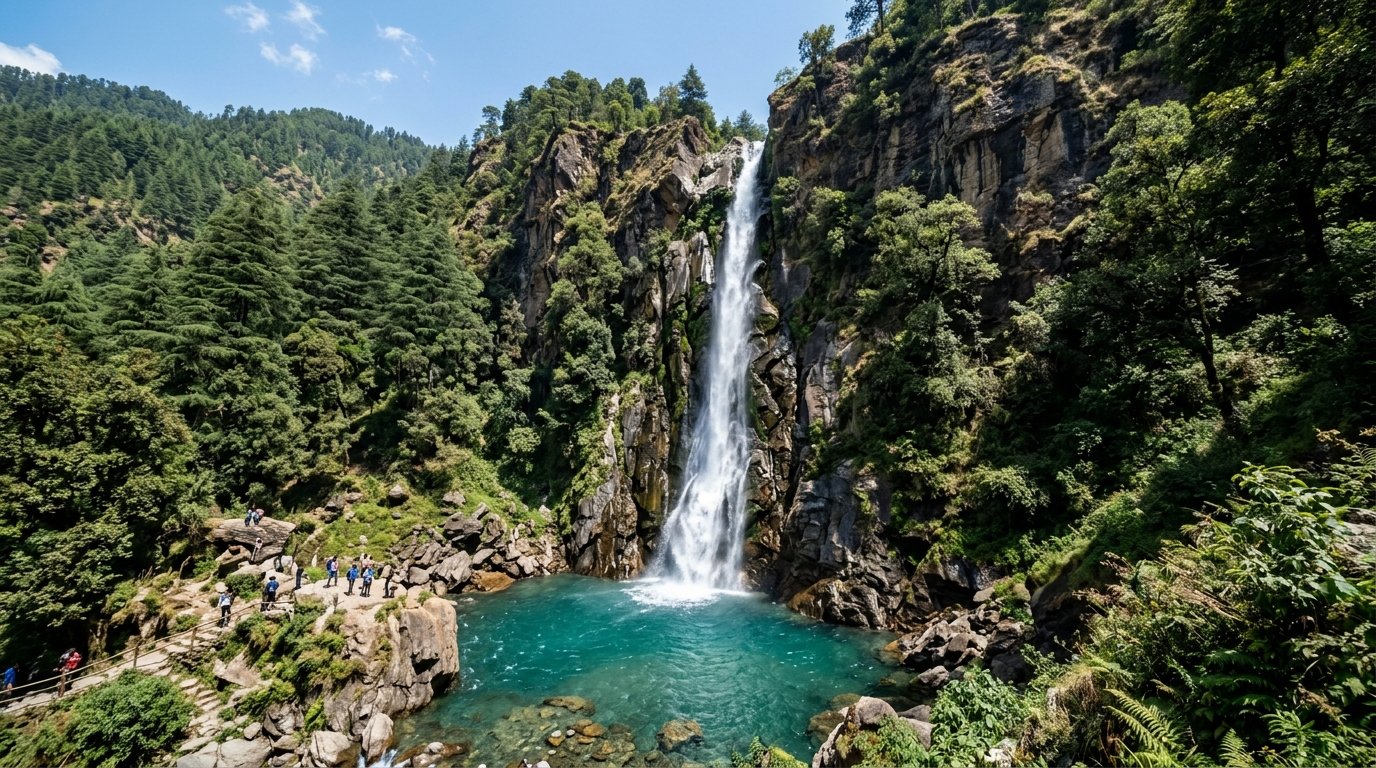
The dramatic elevation gradients of the Himalayas turn Devbhumi Uttarakhand into a sanctuary of awe-inspiring cascades. Fed by eternal glacial fields, high-altitude alpine lakes, and torrential mountain cloudbursts, these waterfalls range from easily accessible roadside family picnic spots to secluded natural plunges guarded by dense subtropical jungles and rugged cliff trails.
Whether you are taking an invigorating dip in the emerald plunge pools of Rishikesh, hiking through the fragrant deodar canopies of Chakrata to witness India’s highest direct drop waterfall, or trekking along the Indo-Tibetan border near Mana Village to stand beneath the holy spray of Vasudhara Falls, Uttarakhand delivers unforgettable aquatic wonders.
1. Why Uttarakhand Waterfalls Are Unique
Unlike monsoon-dependent seasonal streams of central and southern India, many waterfalls in Uttarakhand are perennial glacial torrents fed by melting Himalayan snowpacks. Cascades like Vasudhara Falls at 3,658 meters carry pure mineral-rich glacial melt from the Alaknanda basin, while thermal sulfur springs like Sahastradhara in Dehradun possess documented therapeutic and rejuvenating properties.
Geographic Distribution
Garhwal is famous for high-drop falls and trekking cascades (Tiger Falls, Kempty, Neer Garh, Vasudhara), while Kumaon boasts deep forest plunges with serene Himalayan backdrops (Birthi Falls near Munsiyari, Corbett Falls, Bhalu Gaad near Mukteshwar).
3. Best Time to Visit Uttarakhand Waterfalls
Timing your waterfall excursion is critical for balancing safety and scenic grandeur:
- Post-Monsoon (September to November): The golden window. Falls flow at peak volume, water pools run crystal emerald, and mountain skies are spotless with minimal landslide risk.
- Summer (April to June): Perfect for swimming and family outings at lower-elevation cascades like Neer Garh, Patna Falls, and Kempty Falls to beat the plains heat.
- Monsoon (July to August): Waterfalls roar with colossal force, but trails can be slippery and flash flood risks require extreme vigilance.
4. Essential Safety & Responsible Eco-Tourism Tips
- Wear Sturdy Footwear: Waterfall trails are covered in slippery moss, wet shale, and algae. Always wear trekking shoes with vibram or deep lug soles.
- Avoid Dangerous Plunge Pools: The base of massive falls like Kempty and Tiger Falls generates powerful underwater undertows. Never swim near the direct impact point.
- Strict Zero-Plastic Policy: Carry your trash back. Never leave beverage cans, plastic bottles, or food packets near pristine Himalayan streams.
- Check Local Weather Advisories: Avoid entering narrow gorge waterfalls (like Tiger Falls or Neer Garh) during heavy rain alerts due to sudden water surges.
| Waterfall | Nearest Town | Drop Height | Trek Distance | Best Highlight |
|---|---|---|---|---|
| Tiger Falls | Chakrata | 312 Feet (95 m) | 5 km hike or 1 km walk | One of highest direct drops in India; deodar forest canopy |
| Kempty Falls | Mussoorie | 40 Feet (Multiple tiers) | Cable car / Steps | Classic British-era picnic spot with multi-tiered swimming pool |
| Neer Garh Falls | Rishikesh | 3 Tiers (Up to 30 ft) | 1.5 km uphill trail | Natural limestone pools, cliff jumping, turquoise water |
| Vasudhara Falls | Mana / Badrinath | 400 Feet (122 m) | 5 km glacial trek | Sacred glacial cascade; drops mythically only on pure souls |
| Birthi Falls | Munsiyari | 400 Feet (126 m) | 500 m paved trail | Dramatic roadside mountain drop with Panchachuli peaks backdrop |
| Corbett Falls | Ramnagar / Kaladhungi | 66 Feet (20 m) | 1.5 km jungle trail | Pristine teak forest setting with rich birdlife and tranquility |
| Bhalu Gaad Falls | Mukteshwar | 60 Feet (18 m) | 2 km forest walk | Hidden horseshoe-shaped cascade with rainbow reflections |
| Patna Waterfall | Rishikesh | 40 Feet | 1.5 km steep trek | Natural limestone caves and tranquil secluded pool |
Tiger Falls – Chakrata (India's Pristine Giant)
Crashing down 312 feet into a serene natural pool, Tiger Falls (locally called Keraao Pachad) is one of the highest direct waterfalls in India. Hidden 20 km from Chakrata, the trek passes through lush rhododendron and ancient oak woodlands.
Explore ChakrataKempty Falls – Mussoorie (The Classic Hill Station Cascade)
Developed by British officer John Mekinan in the 1830s for colonial tea parties, Kempty Falls tumbles down massive rocky ledges into a bustling lower pool surrounded by mountain eateries, ropeway cars, and souvenir stalls.
Explore MussoorieVasudhara Falls – Mana Village (The Holy Glacial Wonder)
Just 5 km uphill from India's First Village (Mana) near Badrinath Dham, Vasudhara is an ethereal glacial wonder where water sprays like a misty white veil against sheer rock faces. Hindu mythology associates it with the Pandavas' celestial ascent.
Read Badrinath GuideBirthi Falls – Munsiyari (Crown Jewel of Kumaon)
Surrounded by dense rhododendron blooms and terraced alpine villages along the Thal-Munsiyari road, Birthi Falls plunges dramatically off a vertical cliff with panoramic glimpses of the snow-clad Panchachuli peaks.
Explore MunsiyariFrequently Asked Questions (FAQs)
Vasudhara Falls near Mana Village (Badrinath) and Birthi Falls near Munsiyari are among the highest waterfalls in Uttarakhand, both boasting drops of roughly 400 feet (122 to 126 meters).
Yes, both Neer Garh Waterfall and Patna Waterfall feature clean, natural limestone plunge pools where visitors can take refreshing dips. However, diving into uncharted deep crevices should always be avoided.
Yes. While adventurous travelers can hike the 5 km downhill trail from Chakrata, there is also a motorable road that takes vehicles to within 1 km of Tiger Falls, followed by a well-paved 15-minute downhill walk.
The 5 km trek from Mana Village takes approximately 2 to 3 hours one way over stony glacial moraine terrain. It is moderately demanding due to the high elevation (over 3,600 meters); walking sticks and good warm clothing are recommended.
Exercise caution. While waterfalls display peak volume during July and August, mountain flash floods, slippery rock faces, and road landslides make extreme caution mandatory. Post-monsoon (September to November) is much safer.