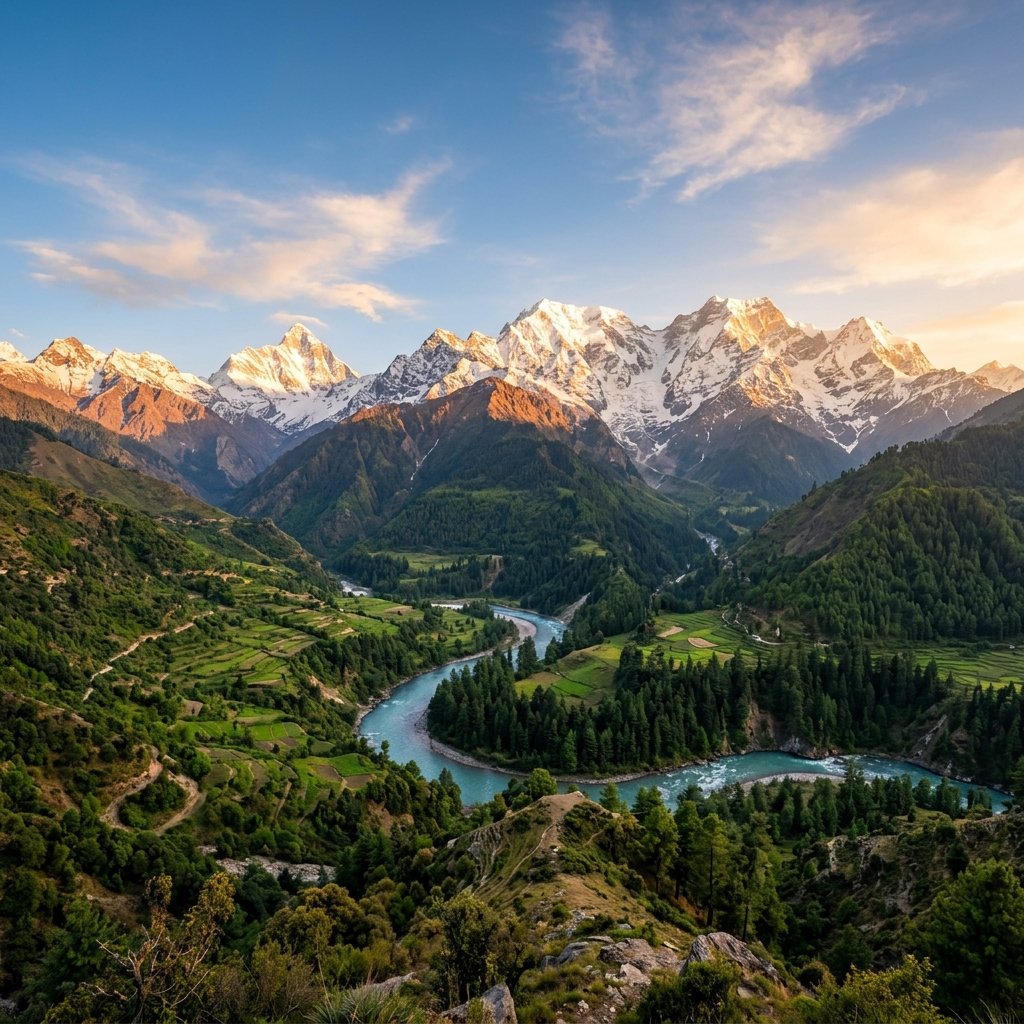
Summer
March – June
15°C to 30°C (Pleasant mountain breezes, clear blue skies)
Ideal for sightseeing, pilgrimage walks, and exploring forest paths with pleasant daytime sunshine and refreshing mountain air.
Village of 55 Katyuri Temples & Himalayan Spiritual Heritage
Nestled peacefully amidst rolling terraced pine valleys in the Almora district of Kumaon, Dwarahat (meaning "Way to Heaven" or "Gateway to the Gods") is celebrated as the historic Village of Temples. Between the 8th and 11th centuries CE, the devout rulers of the illustrious Katyuri dynasty transformed this mountain hamlet into a monumental open-air gallery of sacred architecture, erecting 55 magnificent stone temples that have stood resilient for over a millennium.
The crown jewel of this heritage ensemble is the Gujar Deo Temple, a sculptural marvel featuring intricate Nagara stone spires, carved celestial dancers, and elaborate floral friezes. The shrines are organized into eight distinct historic clusters, including the Kedar, Badrinath, Maniyan, and Ratan Deo groups, each carefully preserved by the Archaeological Survey of India (ASI).
Beyond its ancient stone shrines, Dwarahat is a revered epicenter of Himalayan mysticism. Just 14 km away on a soaring mountain ridge stands the hallowed Dunagiri Devi Temple (Shakti Peeth), while higher still in the mystical meadows of Pandukholi lies the legendary meditation cave of Mahavatar Babaji, immortalized in Paramahansa Yogananda's Autobiography of a Yogi.
Ideal for sightseeing, pilgrimage walks, and exploring forest paths with pleasant daytime sunshine and refreshing mountain air.
Transforming the hillsides into lush emerald landscapes with cascading mountain streams, blooming wild flora, and misty valley vistas.
Crystal clear panoramic views of snow-capped Himalayan peaks, golden post-monsoon sunsets, and peaceful alpine ambience.
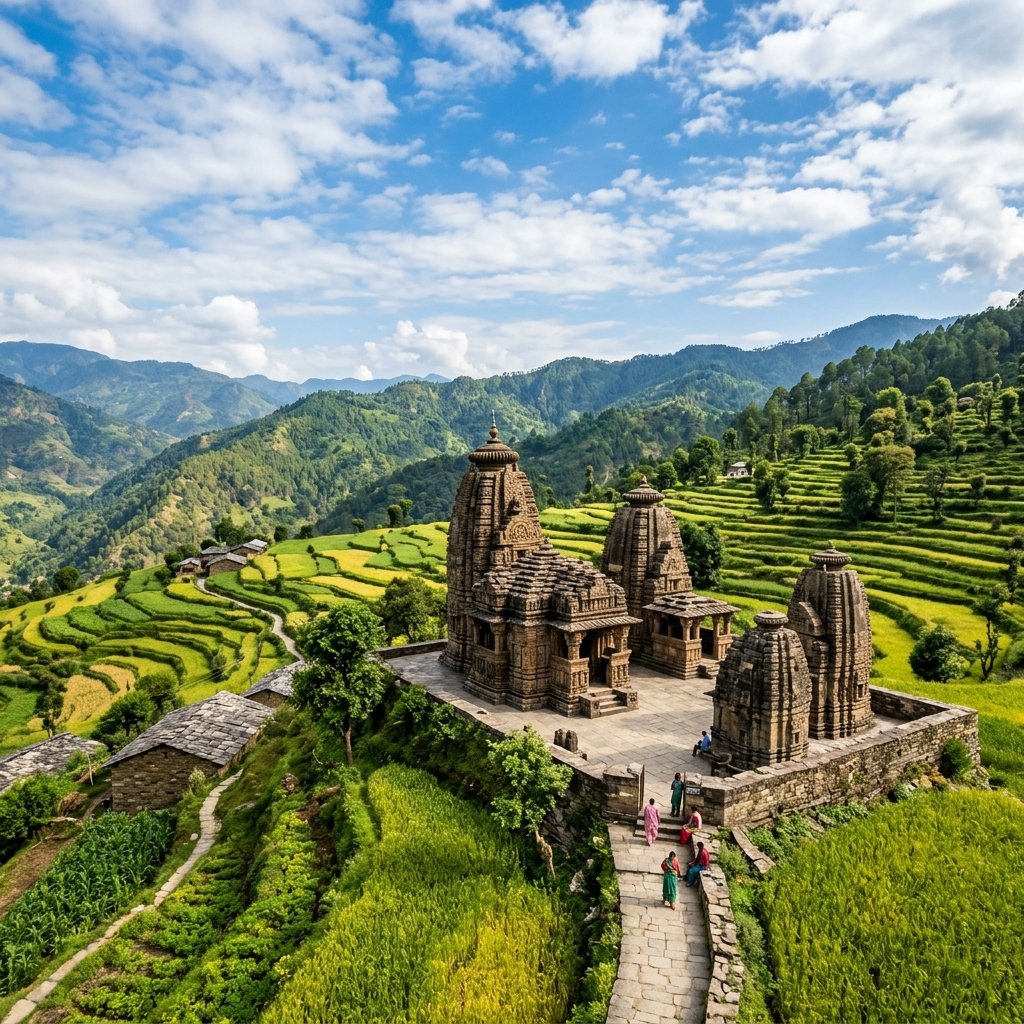 ASI National Monument
01
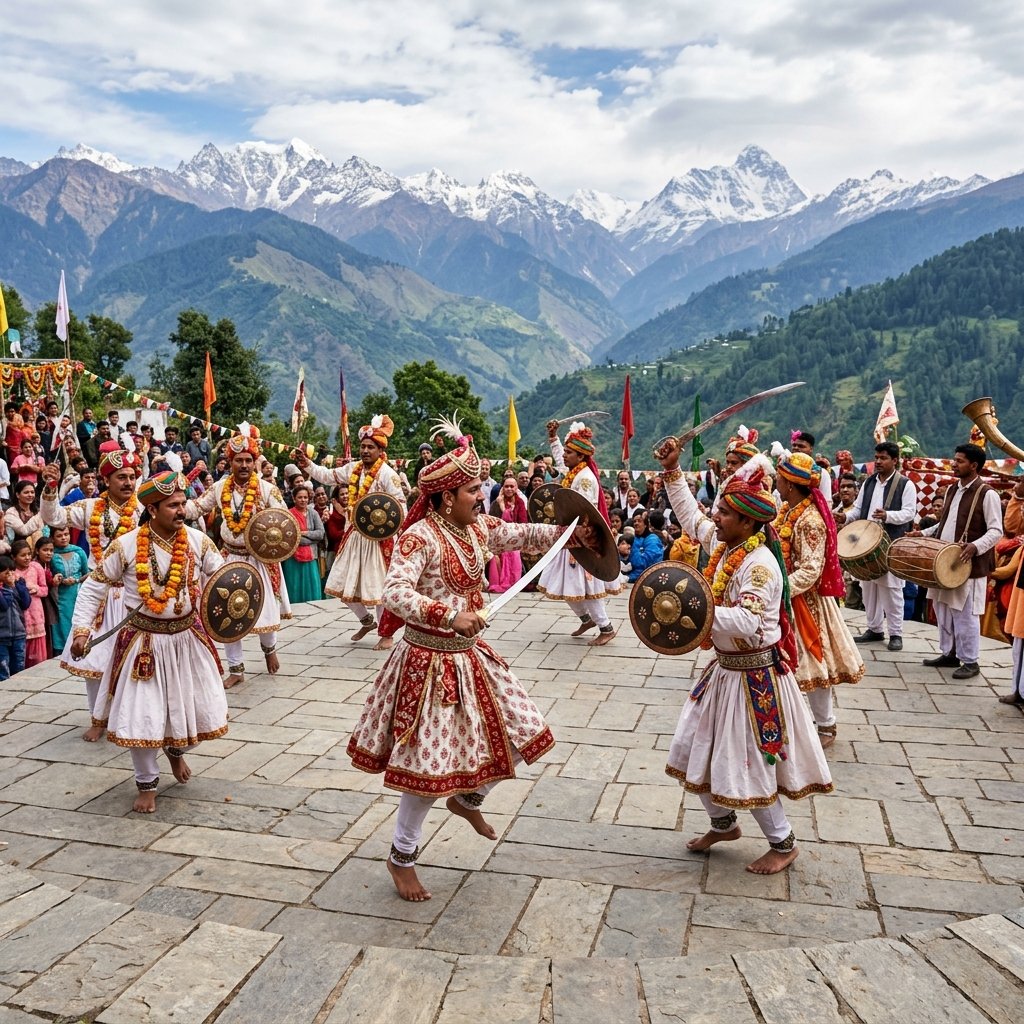 Ancient Shakti Peeth
02
 Himalayan Kriya Yoga Sanctuary
03
Historic Monolithic Shrines
04
Meditation Hermitage
05
Take an early morning architectural walk through the peaceful stone clusters of Gujar Deo, Maniyan, and Kedar groups.
Climb through fragrant deodars to ring the thousands of brass bells dedicated to Maa Dunagiri and soak in the divine energy.
Hike through pine meadows and oak woods up to the serene meditation cave where Paramahansa Yogananda's lineage took root.
Spend quiet moments of self-reflection in the peaceful meditation gardens and library of the YSS ashram.
Best Time to Visit: Photography of the ancient stone temple exteriors is permitted, but please remove shoes before stepping on sacred stone plinths.
Altitude & Acclimatization: If visiting Babaji Cave, start early in the morning as the uphill hike from Kukuchina takes roughly 1.5 to 2 hours.
Local Transport: Dwarahat has comfortable GMVN guesthouses, local homestays, and YSS ashram accommodation for seekers.
Mobile Connectivity: Carry light woolens for summer evenings and warm thermal layers during winter.
What to Pack: Carry sturdy hiking footwear, warm layered woolens, sunscreen, windproof jackets, and basic personal medications.
Eco & Cultural Respect: Follow Leave No Trace ethics, respect temple traditions and customs, and avoid using single-use plastic bottles.
Essential planning tips, weather details, local highlights, and trip advice for exploring Dwarahat.
From ancient heritage shrines and whispering cedar forests to dramatic snowpeak horizons and warm mountain hospitality, Dwarahat offers an indelible Himalayan escape into the tranquil soul of Devbhumi Uttarakhand. Pack light, journey mindfully, and let the mountain serenity restore your spirit.
Start Planning Your Trip →Explore More: Kumaon Travel & Destinations