The Queen of Garhwal & Sacred Pyramid

Neelkanth Peak Viewpoint

The Majestic 6,596-Metre Pyramidal Snow Massif Looming Directly Over Badrinath Valley

Altitude
6,596 m (Summit) / 3,150 m (Viewpoint)
Origin / Era
Colossal Himalayan Massif
Distance
Directly Visible Looming Behind Temple Valley
Timings
Visible 24 Hours (Best at Sunrise 5:30 AM – 6:30 AM)
Home  ›  Destinations  ›  Badrinath  ›  Attractions  ›  Neelkanth Peak Viewpoint
6,596m
Summit Height
3,463m
Vertical Relief
1st Light
Golden Sunrise Glow
Comprehensive Guide

The snow-crowned pyramid christened the "Garhwal Queen" catching the first golden rays of dawn

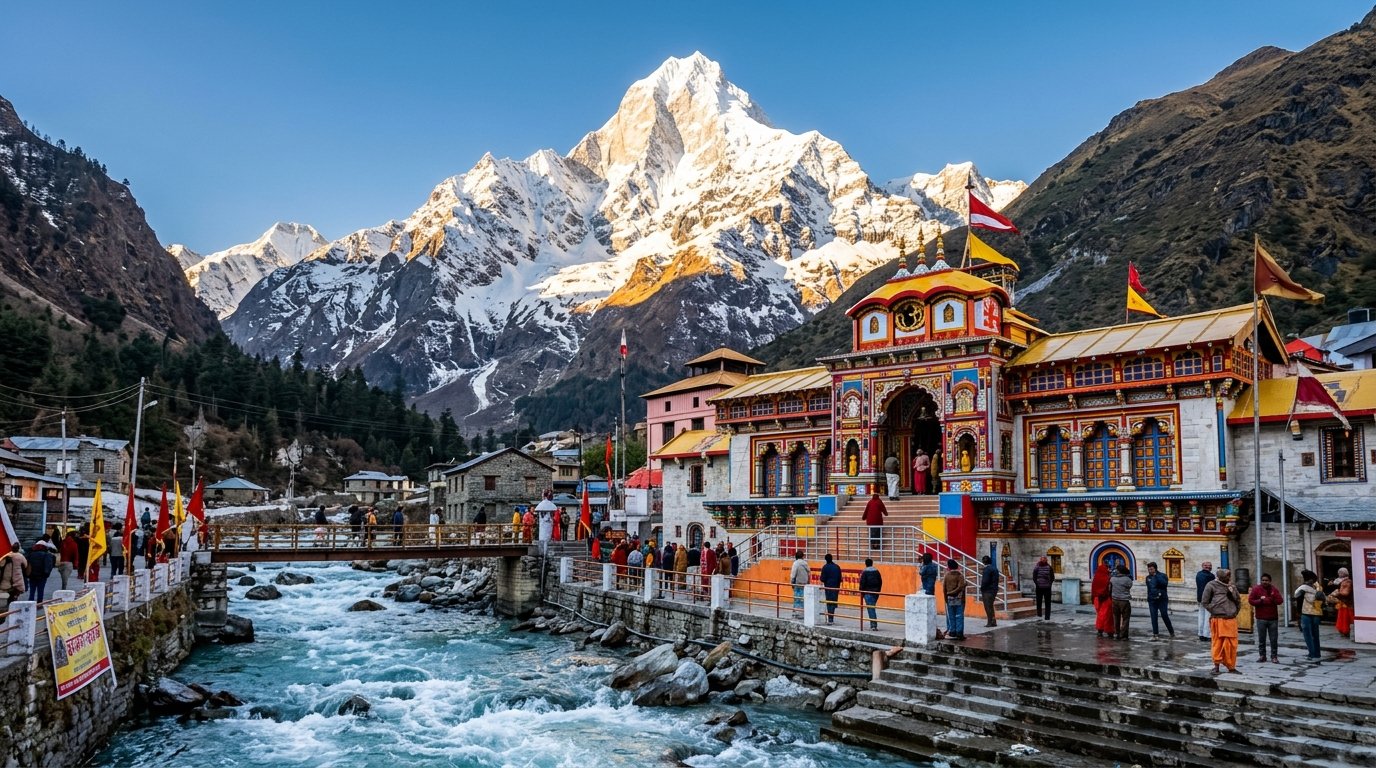
Towering like a colossal frosted pyramid directly behind the Badrinath Temple, Mount Neelkanth (6,596 metres / 21,640 feet) is indisputably one of the most aesthetically dramatic and spiritually revered mountain peaks in the entire Himalayan chain. Known universally as the "Queen of Garhwal" (Garhwal ki Rani), Neelkanth rises with an extraordinary vertical relief of nearly 3,500 metres above the floor of the Alaknanda valley, dominating the western horizon with sheer rock faces and hanging ice cliffs.

The name "Neelkanth" honors Lord Shiva, the Blue-Throated One who drank the cosmic poison Halahala to preserve the universe. In local spiritual lore, while Lord Vishnu resides peacefully as Badri Vishal in the valley floor, Lord Shiva guards the sanctuary from above in the form of this towering icy citadel. Legend also holds that before Badrinath became the abode of Vishnu, it was the original meditation seat of Shiva and Parvati, who shifted their abode to Kedarnath after Vishnu playfully manifested as a crying child.

The sunrise over Neelkanth is an unforgettable, almost mystical visual feast. Because of its commanding height and eastern face, Neelkanth catches the rays of the rising sun long before light penetrates into the deep valley floor of Badrinath. Devotees standing outside the temple at dawn witness the pure white snow summit transform gradually into radiant molten bronze, fiery orange, and luminous gold, casting an ethereal aura over the chanting crowds below.

Key Highlights & Features

The Pyramidal "Garhwal Queen"
A geometrically flawless, sharp snow pyramid rising 3,463 vertical metres above the temple valley.
Magical Golden Dawn Phenomenon
Catches the earliest dawn rays, glowing in radiant orange and gold while the town below remains in dawn shadow.
Premier Photography Backdrop
Frames iconic photographs of the colorful Badrinath Temple facade with the massive snow pyramid directly behind.
Shiva’s Eternal Protective Shield
Revered as the physical presence of Lord Shiva guarding the sacred realm of Vishnu in timeless cosmic balance.

Top Things to Do & Experiences

01

Witness the 5:30 AM Golden Sunrise

Gather on the bridge over the Alaknanda at first light to watch the summit pyramid ignite with vibrant golden illumination.

02

Photograph with Temple Facade

Position your camera from the eastern riverbank to capture the classic postcard shot of Badrinath Temple framed by Neelkanth.

03

Hike to Charan Paduka for Close Vistas

Climb 3 km up Narayan Parbat to get dramatically closer to the hanging glaciers and ice gullies of the massif.

04

Star-Gazing & Moonlit Silhouette

Step out on clear full-moon nights to witness the snow peak glowing like silver under brilliant Himalayan starfields.
Transit & Connectivity

How to Reach Neelkanth Peak Viewpoint

Accessible through scenic Garhwal highways connecting Rishikesh, Devprayag, Rudraprayag, and Joshimath along the national highway network.

By Air (Flight / Helicopter)

Jolly Grant Airport, Dehradun is 314 km away via NH-7 to Badrinath.

By Railway

Rishikesh railway station is 295 km away, offering taxis and buses to Badrinath town.

By Road & Trail

Neelkanth is prominently visible from almost everywhere within Badrinath town, particularly from the Alaknanda bridge, temple courtyard, and bus stand.

Key Distances from Base

Badrinath Temple Courtyard Visible directly behind
Alaknanda River Bridge 200 metres (Best Angle)
Charan Paduka Viewpoint 3 km hike
Mana Village 3.2 km
Joshimath 45 km
Rishikesh 295 km
Pilgrim Essentials

Essential Tips for Visiting

Check Sunrise Timing

During May–June, sunrise on the summit occurs between 5:15 AM and 5:40 AM; set an alarm to be outside on the bridge on time.

Bring a Telephoto Zoom Lens

A 70–200mm or 300mm telephoto lens allows stunning close-up shots of the summit seracs, ice plumes, and snow cornices.

Best Viewing Locations

The main bridge over the Alaknanda, the GMVN tourist complex terrace, and the path to Charan Paduka offer the clearest vantages.

Autumn Offers Crystal Skies

September and October feature pristine, dust-free skies with virtually no haze, creating razor-sharp mountain panoramas.

Frequently Asked Questions

Frequently Asked Questions

Common questions regarding darshan, routes, high-altitude logistics, and seasonal preparation.

Climbing to the summit of Neelkanth (6,596m) is an extremely technical mountaineering expedition for elite climbers. Tourists enjoy panoramic views from valley viewpoints.
Because of its stunning symmetry, isolated solitary grandeur, and majestic pyramidal crown dominating the entire upper Chamoli landscape.
The Alaknanda pedestrian bridge just below the temple and the open grounds near the GMVN tourist rest house offer pristine, unobstructed vistas.
No, Neelkanth is concealed behind intervening ridgelines from Joshimath; it comes into breathtaking full view as you enter the Badrinath valley.