Summer
May – June
4°C – 14°C
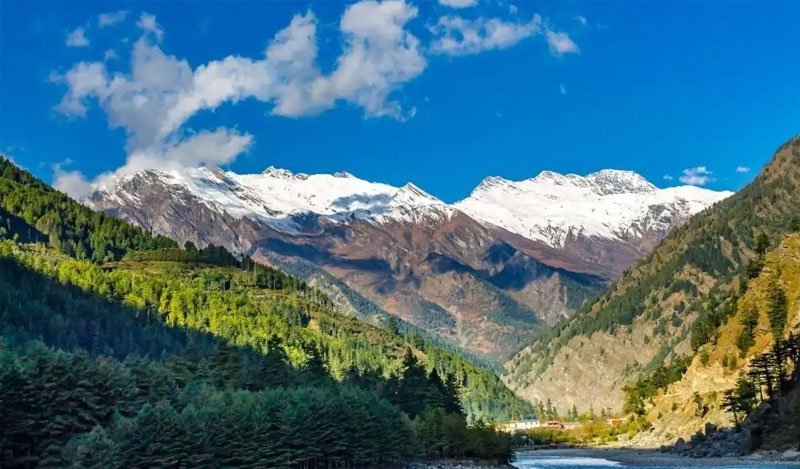
Trekking trails open from Gangotri to Gaumukh and Tapovan. Wild alpine flora blossoms across moraines; days are pleasantly crisp under cobalt mountain skies.
Gaumukh Glacier, Mount Shivling & Tapovan Wilderness · Uttarkashi
Spanning a monumental 2,390 square kilometers across the upper catchment of the Bhagirathi River along the Indo-Tibetan border in Uttarkashi district, Gangotri National Park is the third largest national park in India and one of the most sublime high-altitude wilderness sanctuaries on earth. Established in 1989, the park encompasses a breathtaking landscape of monumental glaciers, vertical granite spires, pristine alpine bugyals, and dense coniferous forests.
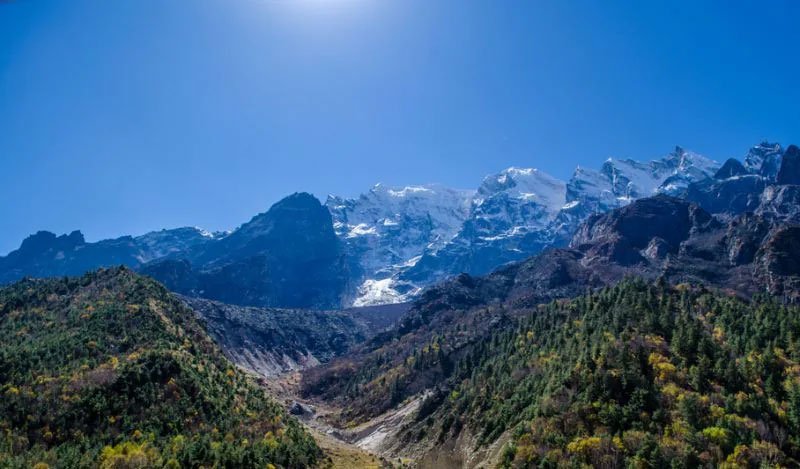
The supreme crowning jewel of the park is Gaumukh (literally "Cow's Snout") at an elevation of 4,000 metres. Here, the colossal 30-kilometer-long Gangotri Glacier—one of the largest glaciers in the Himalayas holding an estimated 27 cubic kilometers of ice—terminates in a sheer vertical wall of blue ice from which the holy Bhagirathi River gushes forth with thunderous power.
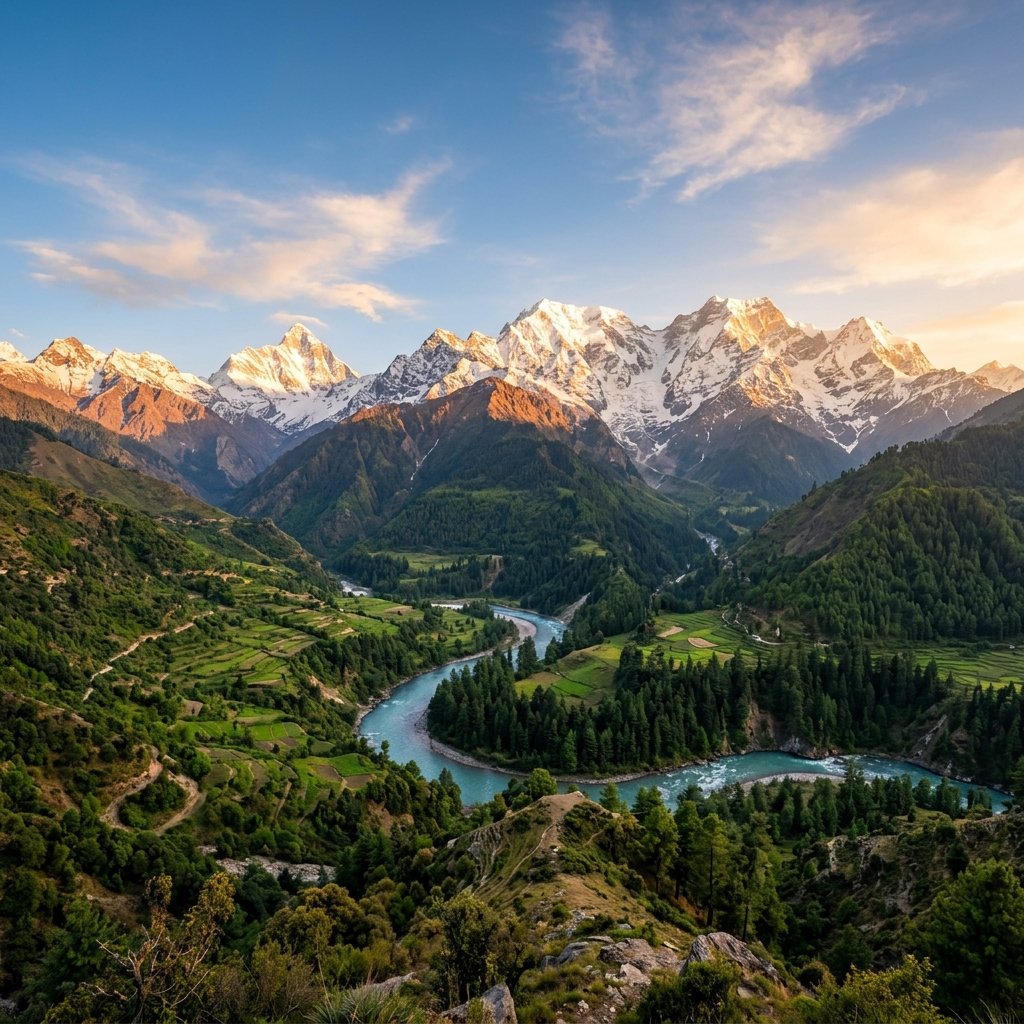
Ascending steeply beyond Gaumukh across glacial moraines leads to Tapovan, an extraordinary high-altitude alpine meadow situated at 4,463 metres (14,640 ft). Famed as the celestial meditation sanctuary of legendary sadhus and rishis, Tapovan offers an intimate, in-your-face view of Mount Shivling (6,543m), revered by mountaineers worldwide as the "Matterhorn of India" for its elegant pyramid of golden granite and fluted ice.
Across the glacier from Tapovan lies Nandanvan (4,337m), an expansive grassy plateau sitting right at the foot of the dramatic Bhagirathi sister peaks (I, II, and III). The park also cradles the fearsome granite walls of Meru Peak (6,660m), famous in global alpine climbing lore for its almost insurmountable "Shark's Fin" route.
Ecology thrives within this extreme sanctuary. The park provides vital sanctuary for rare and endangered high-altitude wildlife, including the elusive snow leopard, blue sheep (bharal), Himalayan ibex, musk deer, Himalayan brown bear, and the golden eagle.
Access to Gangotri National Park is strictly regulated by the Uttarakhand Forest Department to protect its fragile glacial ecosystem, capping visitors to 150 trekkers per day with mandatory eco-permits.
Trekking trails open from Gangotri to Gaumukh and Tapovan. Wild alpine flora blossoms across moraines; days are pleasantly crisp under cobalt mountain skies.
Monsoon showers increase rockfall hazards near Bhojwasa and Gaumukh. Glacier melting causes river surges; permits are restricted during heavy rain.
The park is entirely locked under heavy snow and sub-zero freeze. All forest check-posts are closed; extreme blizzards and sub-zero winds prevail.
 Glacial Source
01
 Celestial Meadow
02
 Iconic Peak
03
 Trekker Base
04
 Forest Campsite
05
 Pine Forest
06
Trek 19 km from Gangotri past Chirbasa and Bhojwasa along rugged mountain trails to stand before the sheer ice snout of Gaumukh.
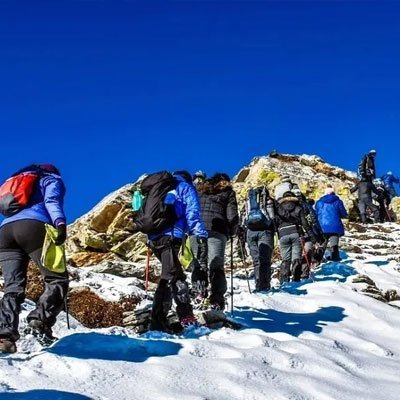
Traverse the boulder-strewn moraine of Gangotri glacier and scramble up the steep ridge to camp directly beneath Mount Shivling.
Observe nimble herds of Himalayan blue sheep grazing fearlessly on the steep scree slopes and moraine ridges near Bhojwasa.
Capture sunrise hitting the triple summits of Bhagirathi peaks as morning light bathes the vast ice fields in hues of amber and gold.
Nature
Adventure
 Spiritual
Nature
Adventure
 Nature
Adventure
 Spiritual
Nature
 Nature
 Spiritual
Nature
Mandatory Forest Entry Permit: Trekking inside Gangotri National Park requires an official entry permit from the Uttarkashi Forest Department. The department caps permits at 150 per day; apply online well in advance.
Certified Guide is Mandatory: The park authority mandates that all trekking groups must be accompanied by a registered local mountain guide to ensure safety on treacherous glacier moraines.
Do Not Approach Glacier Face: Never walk directly beneath the hanging ice wall at Gaumukh. Large blocks of ice calve without warning into the river, which can cause severe accidents.
Acclimatize at Bhojwasa: Never attempt to trek directly from Gangotri (3,100m) to Tapovan (4,463m) in a single day. Break your journey with an overnight camp at Bhojwasa (3,792m).
Zero Waste & Strict Anti-Plastic Rule: Gangotri National Park is a strictly monitored biosphere. Single-use plastic bottles are banned; all non-biodegradable trash must be carried back and checked at the forest gate.
Equip with Technical Trekking Gear: Crossing the glacier from Gaumukh to Tapovan involves navigating slippery scree and steep boulder ridges. Wear crampons or microspikes, sturdy boots, and carry trekking poles.
Essential guide to Gangotri National Park: Gaumukh permits, Tapovan trek, wildlife, and safety rules.
Gangotri National Park is a realm of colossal natural grandeur where ancient ice gives birth to sacred waters and granite spires pierce the azure heavens. Standing on the velvet grass of Tapovan beneath the golden pyramid of Mount Shivling, one touches the eternal, sublime majesty of the high Himalayas.
Start Planning Your Trip →Explore More: High Altitude Biospheres & Glaciers